

As component density continues to increase in aerospace and satellite electronic systems, more radar, communication, and sensing modules are being integrated into limited spaces. As a result, heat dissipation and high-frequency electromagnetic interference (EMI) have become two challenges that must be addressed simultaneously. Conventional designs use separate thermal management materials and electromagnetic shielding materials, but this layered approach often increases system weight and assembly complexity. Thermal conductive RF absorbers enable engineering teams to address both heat dissipation and EMI suppression with a single material, making them an increasingly important option in aerospace electronics design.
Why Aerospace Electronics Face Both Thermal and EMI Challenges
Electronic compartments in aerospace and satellite platforms offer limited installation space, yet they must accommodate radar modules, communication payloads, power conversion units, and various sensing systems. When operating at high power densities, these modules generate significant amounts of heat. If the heat cannot be effectively removed, component aging may accelerate and overall system stability may be compromised.
At the same time, many of these modules operate at high frequencies and are installed in close proximity to one another, increasing the risk of signal interference. Without appropriate electromagnetic-wave absorption, radar transceiver modules, satellite communication antennas, and RF front-end circuits may experience noise coupling, signal distortion, or antenna sidelobe interference. These issues can affect positioning accuracy, communication quality, and overall system reliability.
Under these conditions, engineering teams must address two design challenges that may appear independent but are, in fact, closely related:
- How to efficiently transfer heat generated by high-power components to the heat dissipation structure.
- How to suppress the reflection, coupling, and leakage of high-frequency electromagnetic waves within an enclosed compartment.
This is why thermal conductive RF absorbers are receiving increasing attention in aerospace applications.
How Thermal Conductive RF Absorbers Work
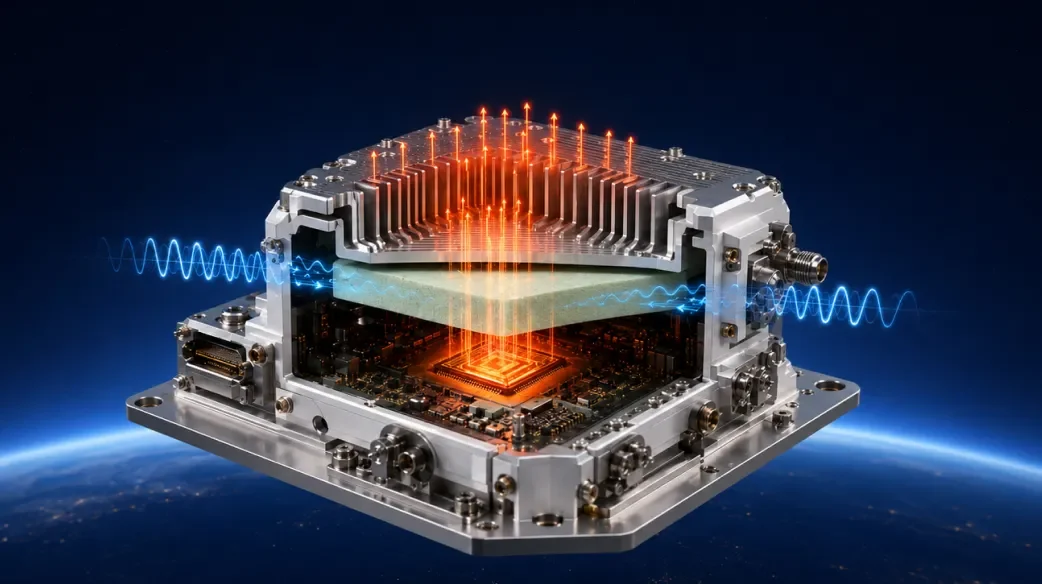
Thermal conductive RF absorbers are designed by uniformly dispersing soft-magnetic electromagnetic-wave-absorbing media within a thermally conductive polymer resin matrix. This structure allows the material to provide two functional pathways simultaneously.
The first pathway is electromagnetic energy conversion. When high-frequency electromagnetic waves enter the material, the soft-magnetic absorbing media convert part of the electromagnetic energy into heat. This reduces the intensity of reflected and transmitted electromagnetic waves, thereby suppressing EMI.
The second pathway is heat conduction. The polymer matrix itself provides thermal conductivity, allowing both the heat generated by electronic components and the heat produced through electromagnetic energy conversion to be transferred to a heat sink, enclosure, or other thermal structure. The heat can then be dissipated from the system through conduction or radiation.

In other words, a thermal conductive RF absorber does more than simply combine the functions of two separate materials. It enables electromagnetic-wave absorption and thermal management to take place within the same material structure, reducing the need for additional material layers and assembly steps.
Key Performance Requirements for Thermal Conductive RF Absorbers in Aerospace Applications
For general electronic products, the selection of thermal conductive RF absorbers usually focuses on thermal conductivity and the EMI absorption frequency range. In aerospace and satellite applications, however, the material must also withstand far more demanding environmental conditions.
Thermal Conductivity and Thermal Resistance
The material must provide sufficient thermal conductivity to efficiently transfer heat from heat-generating components to the heat dissipation structure. This helps prevent localized hot spots that may lead to component derating or shortened service life.
Broadband Electromagnetic-Wave Absorption
Different missions operate across different frequency ranges, from GHz-level communication and radar bands to millimeter-wave applications. The material must provide effective absorption across the actual operating frequencies while maintaining stable dielectric properties, including dielectric constant and dissipation factor (Dk/Df).
Low Outgassing
Aerospace electronic compartments often operate in vacuum or near-vacuum environments. If volatile compounds released from a material condense on optical components, sensors, or electrical contacts, they may cause signal drift or poor electrical contact. For this reason, aerospace materials are commonly required to pass ASTM E595 testing and meet widely used screening limits ofTML < 1.0%、CVCM < 0.1%.The test also measures WVR, or water vapor regained. WVR evaluates the proportion of moisture reabsorbed by the material after water vapor has been released in a vacuum and the specimen has returned to standard ambient temperature and humidity conditions. This value serves as a supplementary reference when interpreting TML results. For example, an elevated TML value in some materials may be caused by moisture loss rather than the release of organic volatile compounds. A complete low-outgassing evaluation should therefore consider TML, CVCM, and WVR together rather than relying on a single value.
Thermal Cycling and Mechanical Compliance
Satellites and aircraft repeatedly experience severe temperature fluctuations during operation. The material must maintain its softness, compressibility, and elastic recovery throughout long-term thermal cycling. This prevents loss of conformity caused by embrittlement or permanent deformation.
Lightweight Requirements
Aerospace payloads are extremely sensitive to weight. In addition to meeting thermal conduction and electromagnetic-wave absorption requirements, the material should minimize weight per unit area to support overall system weight-reduction targets.
Three Typical Application Scenarios
1.Radar and Communication Transceiver Modules
Radar and satellite communication modules often contain multiple high-frequency circuits arranged closely within the same enclosure. Thermal conductive RF absorbers can be applied around the circuits or inside shielding covers to suppress cavity resonance and signal reflection. At the same time, the material transfers heat generated during module operation away from the electronics, preventing high temperatures from affecting the frequency stability of RF components.
2.Satellite Payload Electronic Compartments
Space inside a satellite payload compartment is limited, and power amplifiers, frequency-conversion modules, and power units are often positioned next to one another. Thermal conductive RF absorbers can simultaneously manage heat accumulation within the compartment and reduce electromagnetic coupling between modules, helping maintain the signal integrity of the communication payload.
3.Navigation and Inertial Sensing Modules
Inertial measurement units (IMUs) and navigation sensors are highly sensitive to electromagnetic noise. Even minor interference may affect the accuracy of attitude calculations. Thermal conductive RF absorbers can serve as compliant interfaces around sensing modules, providing both heat dissipation and noise suppression to support measurement stability during long-duration missions.
Choosing Between Silicone and Non-Silicone Thermal Conductive RF Absorbers
Silicone-based thermal conductive RF absorbers are widely used in general electronic applications because of their softness and conformability. However, in vacuum-sensitive environments, around optical components, or in high-reliability aerospace systems, silicone matrices may raise concerns regarding the volatilization of low-molecular-weight siloxanes. Engineering teams therefore often evaluate non-silicone thermal conductive RF absorbers to reduce the risk of molecular contamination.
In practice, material selection is generally based on the following conditions:
- For systems with stringent vacuum compatibility and low-outgassing requirements, such as satellite payloads and modules installed near optical components, non-silicone thermal conductive RF absorbers should be evaluated first.
- For applications such as 5G millimeter-wave systems that require precise control of dielectric properties, RF absorbers with controlled Dk/Df characteristics may be considered.
- For installations with extremely limited space, ultra-thin thermal conductive RF absorbers may be evaluated to meet low-profile design requirements and conform to curved surfaces.
LiPOLY Thermal Conductive RF Absorber Solutions
LiPOLY offers both silicone and non-silicone thermal conductive RF absorber product lines, allowing material selection according to different aerospace and high-frequency application requirements:
- NT92 / NT93 / NT94:Non-silicone thermal conductive RF absorbers with low-outgassing characteristics. They are suitable for vacuum-sensitive and aerospace-grade applications while providing both thermal conductivity and electromagnetic-wave absorption. Depending on the model, thermal conductivity ranges from 2.0 to 4.0 W/m·K.
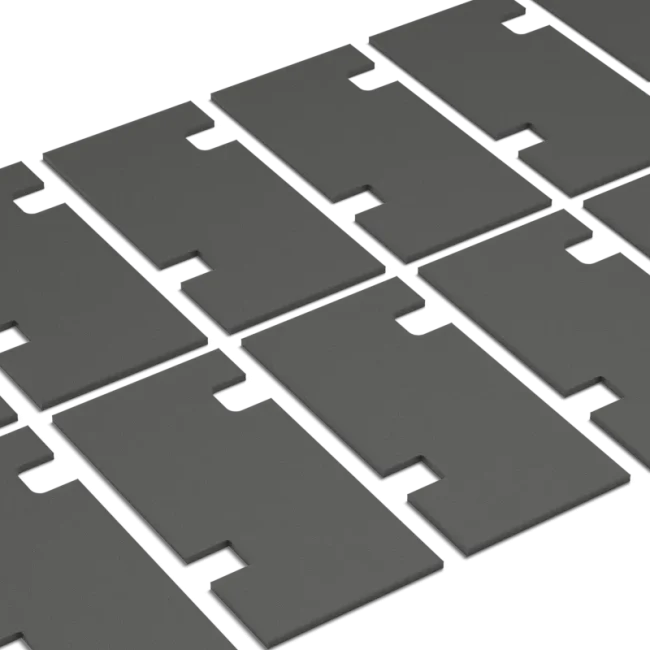
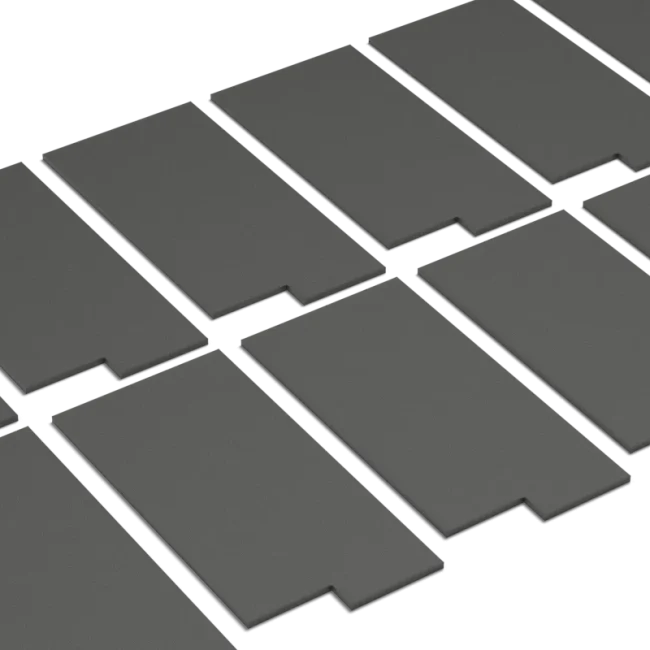
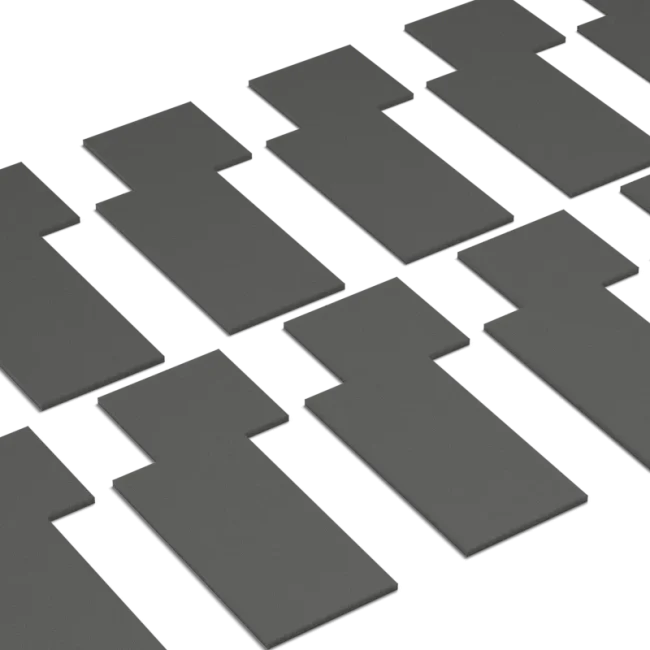
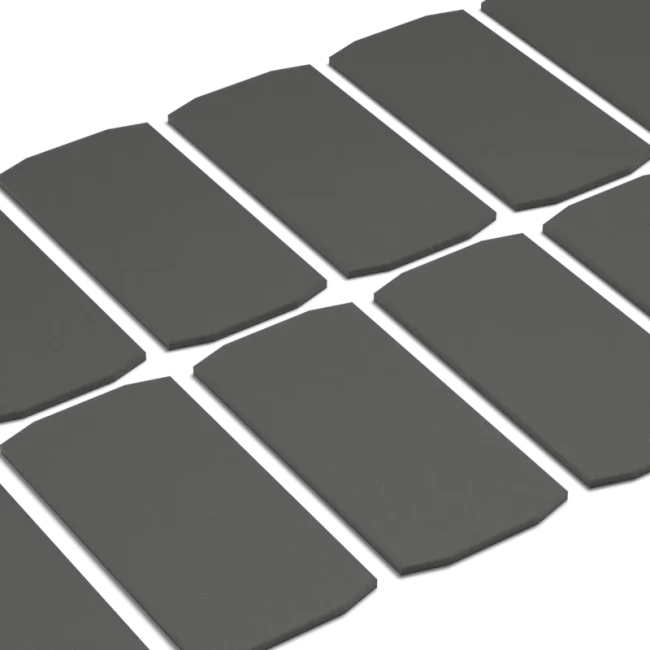
- TEM96 Series:Silicone thermal conductive RF absorber pads with thermal conductivity ranging from 2.0 to 6.0 W/m·K. They are suitable for general high-frequency electronic and communication modules that require both heat transfer and RF absorption.
- Ti900-s:An ultra-thin thermal conductive RF absorber film suitable for space-constrained modules and low-profile interface designs.
- DTT65-s / DTT44-s:Materials featuring controlled Dk/Df characteristics, suitable for high-frequency applications such as 5G millimeter-wave systems that require high dielectric stability.
For aerospace projects that must simultaneously meet heat dissipation, EMI suppression, and low-outgassing requirements, LiPOLY can provide material consultation, sample testing, and relevant ASTM E595, TML, CVCM, and WVR test data to support material evaluation during the early stages of system design.
Request Samples and Technical Information
During the development of radar modules, satellite payloads, navigation sensing systems, and other aerospace electronic equipment, the selection of thermal conductive RF absorbers should not be based solely on thermal conductivity or absorption frequency range. The following factors should also be evaluated together:
- Electromagnetic-Wave Absorption Performance and Applicable Frequency Range
- Low-Outgassing Characteristics and TML, CVCM,andWVR Data
- Thermal Cycling Stability and Mechanical Compliance
- Low-Profile Requirements Under System Weight Constraints
Contact LiPOLY to request product information, technical consultation, and physical samples of thermal conductive RF absorbers, and identify a material solution that provides both effective heat dissipation and EMI suppression for your next aerospace or high-frequency electronics project.
Related Products