Creating a Stable and Reliable Thermal Environment for High-Power AI Computing
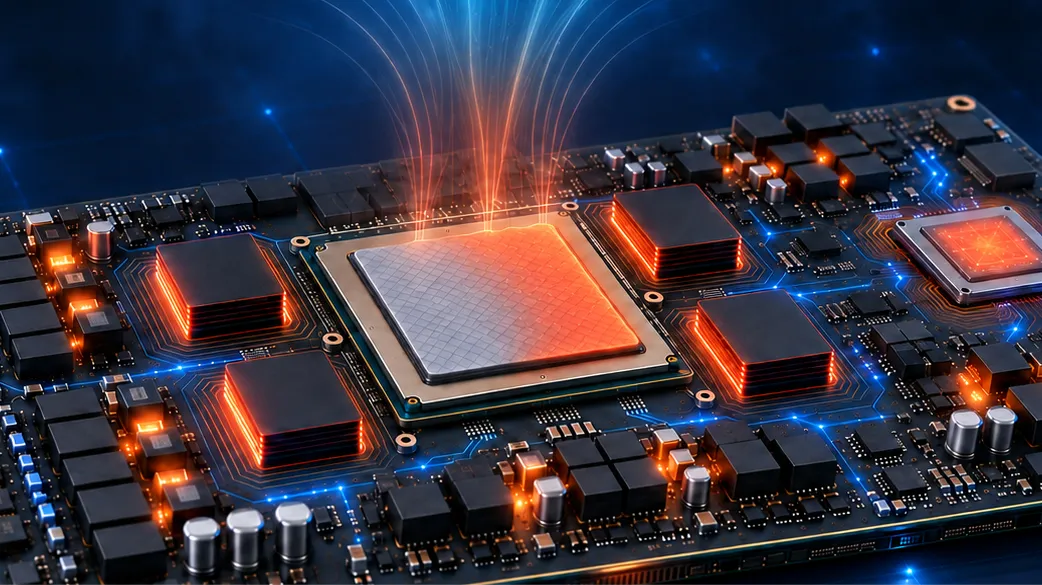
AI cluster computing is pushing chip power consumption toward the kilowatt range. From GPUs, CPUs, and HBM to liquid cooling systems, LiPOLY provides highly thermally conductive, ultra-thin, and reliable thermal materials that help AI computing equipment rapidly reduce hot spots, improve cooling efficiency, and ensure stable long-term operation.
In the Era of High Heat Density, Thermal Management Is Critical to AI Performance
As AI GPUs, liquid-cooled servers, and high-performance computing platforms advance rapidly, chip power consumption and heat density continue to rise. Thermal materials must not only improve cooling efficiency but also support ultra-thin designs, long-term reliability, and manufacturing yield to meet the demands of next-generation AI infrastructure.
01
Challenge
High Heat Density
As GPU and CPU power consumption increases, hot spots become increasingly concentrated.
02
Challenge
Ultra-Thin Design
Space is limited in high-density modules, requiring thermal materials to balance thickness and performance.
03
Challenge
Stable Long-Term Operation
Continuous high-load computing requires materials to maintain long-term reliability.
04
Challenge
Trend Toward Liquid Cooling
Cold plates and liquid cooling architectures require more efficient thermal interfaces.
Thermal Management for High-Speed AI Optical Modules
From Silicon Photonics to CPO: Thermal Performance and Optical Cleanliness
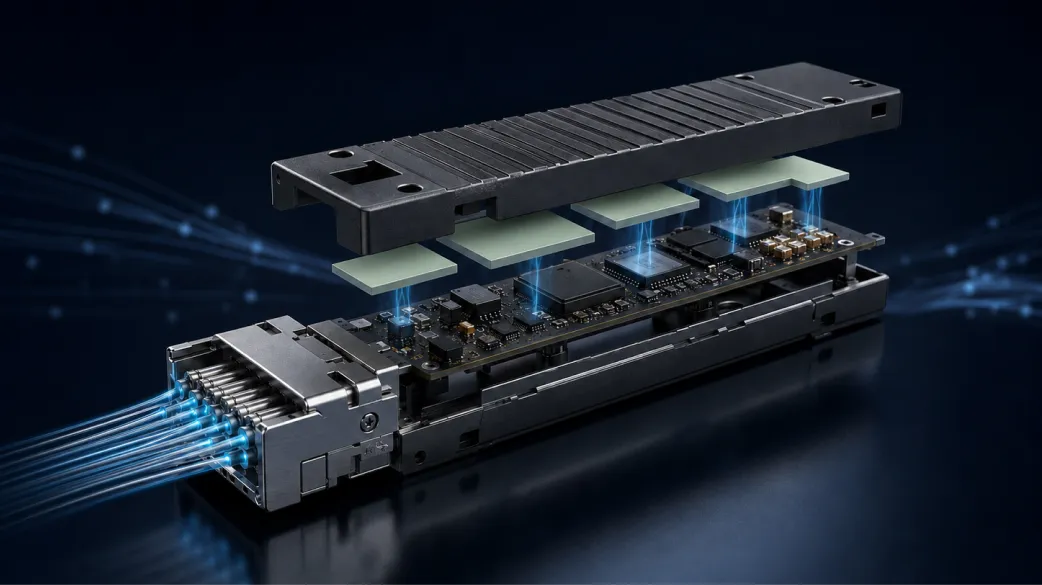
As 800G and 1.6T optical transceivers and co-packaged optics (CPO) advance, the integration of DSPs, lasers and silicon photonic engines creates higher heat density. LiPOLY provides high-conductivity, low-stress and non-silicone thermal materials that transfer heat to the module housing or cooling structure while reducing the risk of optical contamination from volatile siloxanes.
Thermal Management, Signal Stability and Optical Cleanliness
High-Density Cooling
Transfers heat from the DSP, lasers and silicon photonic engine to the module housing.
Stable Optical Signals
Reduces the effects of temperature changes on laser wavelength and optical transmission.
Reduced Optical Contamination
Non-silicone materials reduce the risk of siloxane condensation on optical surfaces.
Why Consider Non-Silicone Materials for AI Optical Modules?
Optical modules contain enclosed spaces located close to fiber end faces, lenses and laser windows. When heated, some silicone materials may release low-molecular-weight siloxanes that condense on cooler optical surfaces, reducing light transmission, increasing insertion loss and degrading signal quality.
Heat-Induced Volatilization
Internal Migration
Condensation on Optical Surfaces
Signal Degradation
LiPOLY non-silicone materials have no siloxane resin backbone, combining heat transfer, gap filling and optical cleanliness.
Applications
AI Optical Transceivers
Silicon Photonic Engines
Co-Packaged Optics (CPO)
High-Speed Switches
AI Computing Applications
Thermal Materials Are Widely Used in Various Types of AI Computing Equipment
Scenario
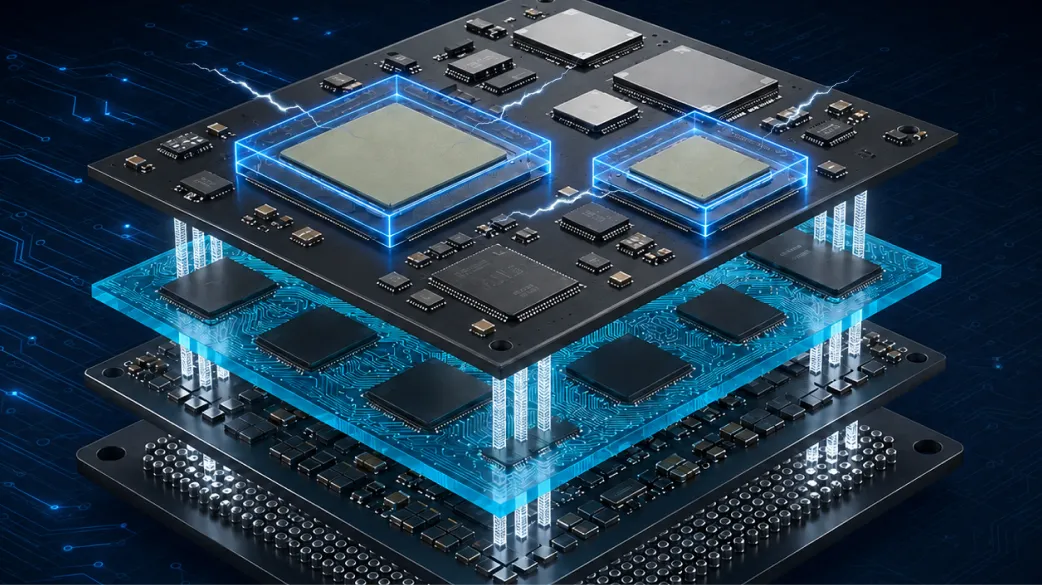
AI GPU Modules
GPU
HBM
VRM
AI Accelerator
Scenario
AI Servers
CPU
Memory
Power Module
SSD
Scenario
Liquid Cooling Systems
Cold Plate
CDU
Pump
Manifold
Scenario
High-Speed Networking Equipment
Switch ASIC
Smart NIC
DPU
Network Module
Why Choose LiPOLY?
Thermal Material Capabilities Built for AI Computing
With extensive expertise in thermal material technology, LiPOLY provides comprehensive material solutions for the high heat density, ultra-thin design, and liquid cooling requirements of AI applications.
Combining high thermal conductivity, excellent reliability, and rapid customization, our solutions help customers shorten development cycles and strengthen product competitiveness.
vertical_align_center
0.15 mm Ultra-Thin Material Technology
Available in thicknesses as low as 0.15 mm, making it suitable for high-density electronic modules and space-constrained designs.
windshield_heat_front
High Thermal Conductivity Materials
Offering materials with thermal conductivity of 8 W/m·K or above, reaching up to 24.0 W/m·K, to rapidly reduce chip thermal resistance.
solar_power
Rapid Custom Development
Thickness, dimensions, hardness, and material formulations can be customized, with samples available in as little as three days.
cheer
In-House R&D and Manufacturing in Taiwan
In-house material development and production ensure a stable supply and comprehensive technical support.
Power density inside AI GPU modules keeps climbing, pushing the GPU, HBM, and VRM ever closer to their thermal design limits. This article focuses on GPU chip-level TIM, examining how PCM900 phase change material works and the reliability data behind it.
Package warpage and component height variation can raise HBM junction temperature and trigger thermal throttling. This article explains how gap filler materials address this challenge and reviews Ultra3065's specifications and reliability data.
Optical module power is rising fast — TIM selection must now balance thermal performance with optical surface cleanliness. This article explains the siloxane contamination mechanism and offers non-silicone pad/putty selection guidance.
Discuss Your AI Thermal Management Needs with Us
Whether you are developing AI GPUs, AI servers, liquid cooling systems, or high-performance computing equipment, the LiPOLY team can help identify the most suitable thermal material solution and provide technical support from material selection through custom development.
support_agent
Technical Support
Evaluate the best thermal solution
trackpad_input
Material Selection
Quickly identify the right material combination
dashboard_2_edit
Custom Solutions
Create dedicated material solutions according to your needs
Thermal Solutions Expert
SHIU LI TECHNOLOGY CO., LTD.
Taoyuan City, Bade District, Yongfeng Road, No. 435
Product News | N700C, N800A-s, N800B, and N800C Non-Silicone Thermal Pads Comply with ASTM E595 Test Requirements. For detailed specifications, please refer to the product datasheets.