

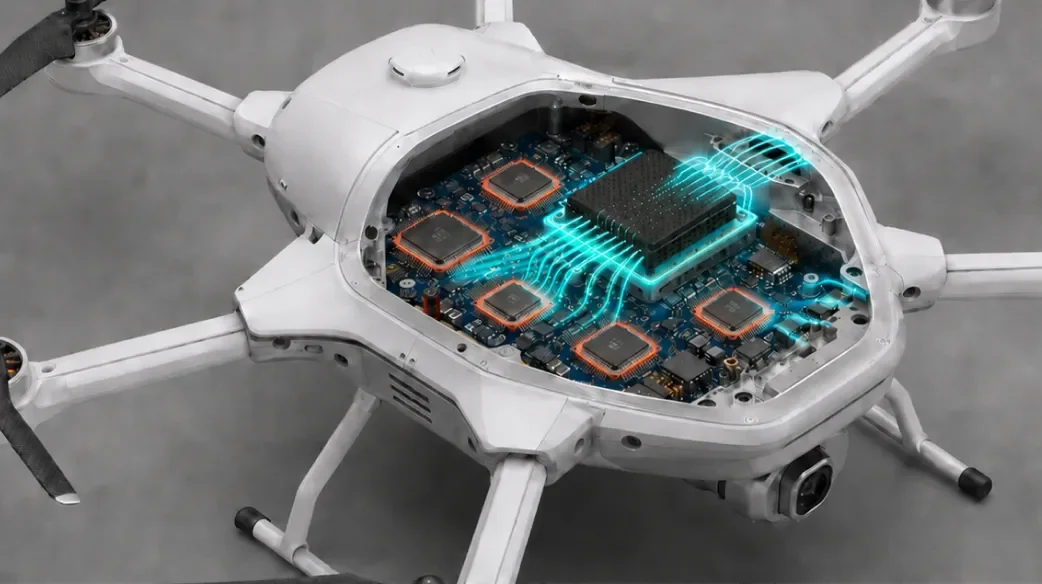
As AI computing, millimeter-wave communications, and high-speed data transmission technologies are rapidly integrated into drone platforms, thermal management and electromagnetic interference (EMI) have become two core challenges in drone electronic system design.
Drone Thermal Management Requirements: From Computing Chips to Battery Modules
Power Consumption of AI Computing Chips Continues to Rise
To support autonomous navigation, image recognition, and real-time decision-making, modern drones are beginning to incorporate NVIDIA Jetson Orin series modules, Qualcomm robotics platforms, various FPGAs, and AI accelerators. For example, the NVIDIA Jetson AGX Orin module can be configured for power consumption between 15W and 60W while delivering up to 275 TOPS of AI computing performance. Within the compact, enclosed, and airflow-constrained body of a drone, this level of power density presents a significant thermal design challenge.
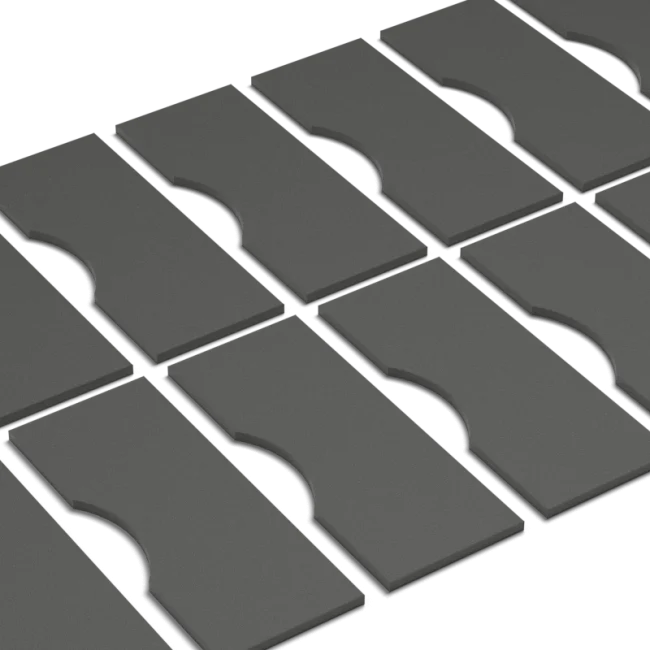
Depending on the application level, the thermal conductivity requirements for TIMs used with AI computing modules can generally be divided into three tiers: approximately 6–12 W/m·K for commercial models, approximately 12–20 W/m·K for advanced industrial models, and above 20 W/m·K for military-grade and high-power AI platforms. Common material formats include thermal pads, thermal grease, phase change materials (PCMs), and gap fillers, which fill gaps between chips and heat-dissipation structures and reduce interfacial thermal resistance.
ESC, Batteries, and Sensor Modules Also Require Efficient Thermal Management
In addition to computing chips, drone propulsion and sensing systems are also major heat sources:
- ESC (electronic speed controller):High-speed switching causes significant MOSFET heat generation, requiring highly insulating, vibration-resistant thermal pads, thermally conductive potting compounds, and thermally conductive adhesives rated above 150°C to help ensure reliable motor control.
- Battery module:Fast charging, high-rate discharge, and long-duration flight make lithium battery thermal management increasingly critical. Thermal gap pads, PCMs, and thermally conductive potting materials can help equalize battery-pack temperatures, reduce thermal-runaway risk, and extend cycle life.
- Radar and camera modules:The 24 GHz, 60 GHz, and 77 GHz mmWave radar ICs and AI cameras (including ISP, DDR, and NPU) used in drones have concentrated power consumption and heat generation. In addition to high-thermal-conductivity TIMs, materials with a low dielectric constant (Dk) and low dissipation factor (Df) are needed to avoid affecting high-frequency signal quality. For optical modules, non-silicone TIMs eliminate concerns about low-molecular-weight siloxane outgassing and can help prevent contamination of lens and sensor surfaces, making them a more suitable choice.
Why Thermal EMI Absorbers Matter: Addressing Heat and EMI Together
Multi-Band Coexistence Intensifies EMI Challenges
An advanced drone may simultaneously integrate multiple RF modules, including GPS/BeiDou positioning, Wi-Fi 6/7, 5G, remote-control links, video transmission systems, and mmWave radar.
Thermal EMI absorber materials combine soft magnetic powders with a polymer matrix. Rather than simply reflecting electromagnetic waves, they convert electromagnetic energy into heat for dissipation, helping avoid secondary interference within the enclosure. Their thermal conductivity also transfers chip heat toward the heat-dissipation structure.
Military Drones Face More Stringent Requirements
In addition to general EMI suppression, military drones must reduce RF signal leakage and radar scattering signatures while maintaining high reliability under harsh conditions such as wide temperature ranges and vibration.Drone cameras and optical payloads are also sensitive to material outgassing. Low-molecular-weight siloxanes released from silicone-containing materials may contaminate lens and sensor surfaces or interfere with electrical contacts inside enclosed compartments. Non-silicone thermal and absorber materials therefore offer increasingly clear advantages in optical and sealed modules.
Primary Application Locations
| Application Module | Thermal Conductive Materials | Thermal Conductive Absorber Materials |
|---|---|---|
| AI computing module (SoC/DDR/storage) | ✔ | ✔ |
| mmWave radar | ✔ | ✔ |
| Communication module (Wi-Fi/5G) | ✔ | ✔ |
| Camera module (ISP/NPU) | ✔ | ✔ |
| ESC | ✔ | Limited Use |
| Battery systems | ✔ | — |
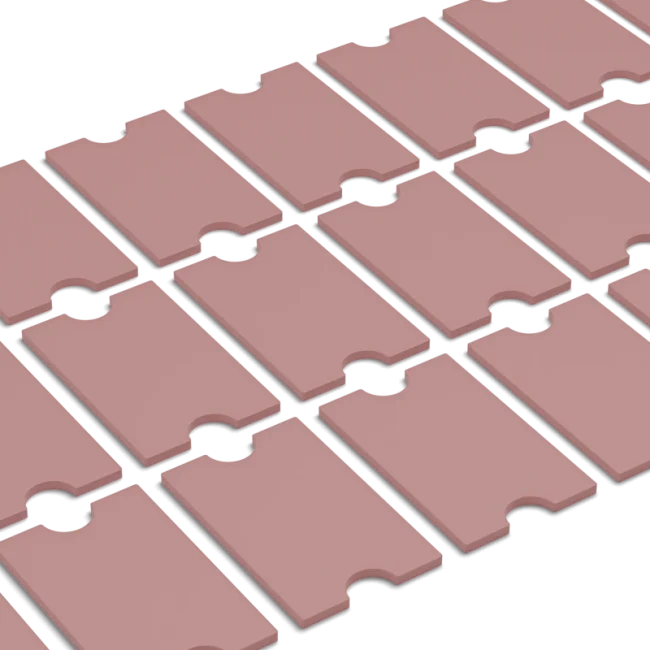
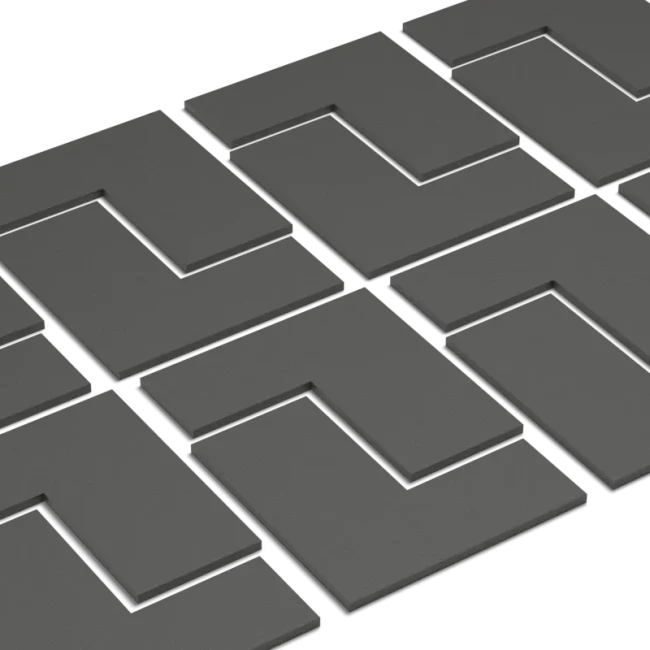
In practical designs, a common approach is to use a high-thermal-conductivity TIM on the main chip to connect it to the heat-dissipation structure, while applying thermal EMI absorber sheets around the chip, inside shielding covers, or between modules. Some designs directly use a Thermal EMI Pad that combines both functions, simplifying the stack-up and saving space.
Market Trends: Rapid Growth in AI, Logistics, Military, and Swarm Drones
From a market perspective, several high-growth applications are simultaneously driving material demand:
- Commercial and logistics drones:Research and Markets projects that the global commercial drone market will grow from approximately USD 27.6 billion in 2026 to approximately USD 51.4 billion by 2032, with a CAGR of about 10.8%. The cargo drone market is expected to grow even faster, from approximately USD 3.1 billion in 2026 to approximately USD 10.7 billion by 2030 at a compound annual growth rate exceeding 35%.
- Military and swarm drones:The U.S. Department of Defense allocated approximately USD 13.4 billion to autonomous systems and USD 3.1 billion to counter-drone capabilities for fiscal year 2026. Subsequent budget proposals would raise drone- and counter-drone-related investment to more than USD 70 billion. Swarm drones have also progressed from proof-of-concept work to field exercises and mass-production programs.
These platforms share several characteristics: higher-power AI computing, more mmWave communication systems and antennas, and higher data transmission rates. This means both the quantity and performance requirements of thermal materials and thermal EMI absorbers used in each platform will increase accordingly.

Conclusion: Advancing Thermal Conductivity, Low Dielectric Properties, Lightweight Design, and EMI Suppression
Based on the analysis above, the future direction of drone materials can be summarized in five keywords:high thermal conductivity, low dielectric constant (Dk), low loss at high frequencies (Df), lightweight design, and EMI suppression. Thermal materials and thermal EMI absorbers will evolve from supporting components into key materials that influence the reliability, endurance, and communication quality of advanced drones, giving the market long-term growth potential.
LiPOLY provides a comprehensive portfolio of thermal management and EMI suppression materials for drone applications:
| Product Series | Thermal Conductivity | Features | Applications |
|---|---|---|---|
| TEM96 Series Thermal EMI Absorber Pads | 2.0~6.0 W/m・K | Operating frequency: 10MHz–77GHz; converts electromagnetic waves into heat for dissipation | mmWave radar, 5G/Wi-Fi modules, AI computing modules |
| NT92/NT93/NT94 Non-Silicone Thermal EMI Absorber Pads | 2.0~4.0 W/m・K | Operating frequency: 10MHz–77GHz; no low-molecular-weight siloxane outgassing | Optical modules, military-grade electronic equipment |
| Ti900-s Thermal EMI Absorber Film | 1.5 W/m・K | Thin design; operating frequency: 10MHz–77GHz | Space-constrained communication and camera modules |
| DTT44-s/DTT65-s 5G mmWave Thermal Pads | 3.0~5.0 W/m・K | Low Dk and low Df to reduce RF module interference | mmWave radar, high-speed communication modules |
| N800C Non-Silicone Thermal Pad | 17.0 W/m・K | No low-molecular-weight siloxane outgassing; low contact thermal resistance | High-power AI SoCs, optical instruments |
If you are evaluating materials for drone thermal management or EMI mitigation, contact LiPOLY. Our technical team can provide suitable material-selection recommendations and sample-testing support based on your module power consumption, frequency band, and structural requirements.
References
- Fortune Business Insights, “Drone Market Size, Share | Industry Report [2026-2034]”
- Research and Markets, “Commercial Drone Market – Global Forecast 2026-2032”
- The Business Research Company, “Cargo Drones Market Size, Share, Trends, Growth Report 2026”
- DefenseScoop, “DOD moves to make its largest-ever investment in drones and anti-drone weapons”
- NVIDIA, “Jetson AGX Orin for Next-Gen Robotics”
- Texas Instruments, “Using mmWave Technology to Enable Sense and Avoid in Drones”
- Advanced Composites and Hybrid Materials (Springer), “Recent advances in polymer-based composites for thermal management and electromagnetic wave absorption”
- Shiu Li E-Catalogue 2026
Related Products