Developing Better Thermal Solutions from Material Properties
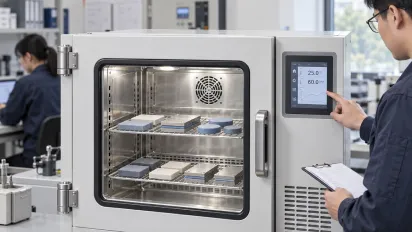
Shiu Li integrates polymer formulation development and material analysis technologies. We tailor thermal conductivity, hardness, and insulation properties to thermal requirements and continuously optimize material performance through test data to provide suitable thermal solutions.
Meeting Diverse Application Needs Through Materials Technology
Mastering the Essentials of Material Development from Formulation Design to Performance Optimization
Based on thermal conditions, contact pressure, electrical requirements, and operating environments, Shiu Li evaluates material composition and performance to provide thermal materials suited to diverse application needs.
experiment
Material Formulation Development
Tailoring Material Properties to Application Conditions
Our development scope includes high-thermal-conductivity, non-silicone, low-outgassing, electrically insulating, thermally conductive wave-absorbing, and special-environment materials. By adjusting the matrix, fillers, and formulation ratios, we balance thermal efficiency, softness, and material stability.
lab_research
Material Performance Analysis
Understanding Key Properties Through Measurement Data
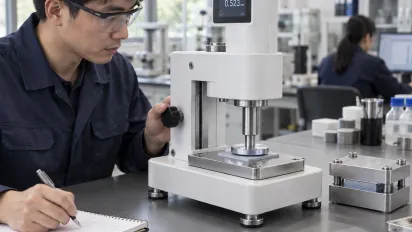
We test thermal conductivity, thermal resistance, thickness, density, hardness, and electrical properties to analyze performance differences across formulations and operating conditions, providing a basis for material development and selection.
finance_mode
Material Performance Optimization
Balancing Thermal Efficiency with Real-World Operating Conditions
Based on material analysis results, we adjust thermal performance, compressibility, hardness, and insulation to improve conformity between the material and contact surfaces and meet diverse structural and thermal design requirements.
Comprehensive Material Evaluation from Thermal and Physical to Electrical Properties
Establishing a Basis for Material Development and Selection Through Standardized Test Methods
The performance of thermal interface materials depends not only on thermal conductivity, but also on bond line thickness, contact pressure, hardness, and electrical requirements. Shiu Li uses a range of test methods to evaluate the properties that matter in real-world applications.
windshield_heat_front
Thermal Performance Analysis
4 Tests
The performance of thermal interface materials depends not only on thermal conductivity, but also on bond line thickness, contact pressure, hardness, and electrical requirements. Shiu Li uses a range of test methods to evaluate the properties that matter in real-world applications.
Thermal Resistance
ASTM D5470
Thermal Conductivity
ISO 22007-2/ASTM D5470
Coefficient of Thermal Expansion (CTE)
ASTM E228
Heat Capacity (Cp)
ASTM E1269
Thermal Resistance Analyzer
Measures the thermal resistance and heat transfer performance of thermal interface materials to evaluate heat dissipation efficiency at different thicknesses and contact conditions.
Thermal Conductivity Analyzer
Measures the thermal conductivity of thermal pads and other thermal materials to analyze their heat conduction capability and performance differences.
Differential Scanning Calorimeter
Analyzes thermal properties of polymer materials, including glass transition, melting, and curing, to evaluate thermal transition behavior and formulation performance.
Analyzes material hardness, deformation, strength, and flow behavior to confirm suitability for processing and application.
Specific Gravity
ASTM D792
Shore and ASKER C Hardness
ASTM D2240/JIS K 7312
Tensile Strength and Elongation
ASTM D412
Compression Deformation
Internal Test Method
Viscosity
DIN 53018/ISO 3219
Polymer Rheology Analysis Equipment
Analyzes the rheological and curing properties of polymer materials to evaluate performance changes and stability during processing.
Laser Particle Size Analyzer
Measures the particle size and distribution of thermally conductive fillers to help evaluate filler dispersion and formulation uniformity.
Mechanical Material Analyzer
Tests the tensile strength and elongation of thermal materials to evaluate deformation behavior and mechanical properties under load.
Material Hardness Tester
Measures the hardness of thermal pads and polymer materials to evaluate softness and conformity to contact surfaces.
Gel Viscosity Analyzer
Measures the viscosity of thermal gels and gel materials to evaluate flow behavior and suitability for dispensing processes.
Fluid Viscosity Analyzer
Analyzes the viscosity and flow performance of liquid thermal materials to help evaluate suitability for coating, gap filling, and manufacturing processes.
Contact Angle / Surface Energy Analyzer
Measures material surface contact angle and surface energy to evaluate wettability, adhesion, and surface treatment effectiveness.
Confirms electrical insulation and dielectric properties to support material selection for electronic components and high-voltage applications.
Breakdown Voltage
ASTM D149
Surface and Volume Resistivity
ASTM D257
Dielectric Constant and Loss
ASTM D150
Dielectric Breakdown Analyzer
Tests the dielectric breakdown performance of thermally conductive insulating materials to evaluate electrical insulation under high electric fields.
High-Voltage Withstand Tester
Applies a specified test voltage to evaluate the voltage withstand performance and electrical safety properties of thermally conductive insulating materials.
Electrical Impedance Analyzer
Measures material resistance and impedance to analyze the electrical performance of thermal materials and their frequency-dependent behavior.
Analyzes low-outgassing behavior, material composition, electromagnetic shielding, and other special performance requirements.
Total Mass Loss(TML)
Internal Test Method
low molecular weight siloxane
Gas Chromatography (GC)
EMI Attenuation
ASTM D4935
Flammability
UL 94
Thermogravimetric Loss (TGA)
Thermogravimetric Analysis (TGA)
Far-Infrared Emissivity
FT-IR Analysis
Material Thermal Stability and Composition Analysis
TGA / DSC Analysis
Gas Chromatograph
Analyzes specific volatile components in non-silicone and low-outgassing thermal materials to evaluate low-molecular-weight siloxane content.
Hazardous Substance Analyzer
Detects specified hazardous substances in thermal materials to help confirm material composition and compliance with relevant environmental regulations.
High-Frequency Network Analyzer
Measures the high-frequency electromagnetic properties of thermally conductive wave-absorbing materials to evaluate electromagnetic wave attenuation and EMI suppression.
High-Magnification Optical Microscope
Magnifies and observes the surfaces and microstructures of thermal materials to help analyze dispersion, defects, and appearance quality.
Thermogravimetric Analyzer
Measures changes in the weight of thermal materials during heating to analyze thermal decomposition, material composition, and thermal stability.
From Requirements Analysis to Material Optimization
Continuously Refining Material Performance Based on Test Data
01
Requirements Assessment
We confirm heat source conditions, thermal structures, bond line gaps, assembly pressure, and electrical requirements to establish the direction for material development.
02
Formulation Development
We select matrix materials and fillers according to target properties and adjust material composition, hardness, and other key characteristics.
03
Performance Analysis
We test thermal conductivity, thermal resistance, physical properties, and electrical properties to identify differences between material performance and design targets.
04
Formulation Optimization
Based on test results, we adjust the formulation and process conditions to confirm that the material meets subsequent validation and application requirements.
Comprehensive Technical Support from Material R&D to Mass Production
Whether you need material selection for a new product, solutions for special environments or custom development, LiPOLY’s engineering team can help evaluate suitable materials and validation methods.
Make Material Performance a Better Fit for Your Application
Technical Development Support from Material Selection to Custom Formulation
Whether you need high thermal conductivity, non-silicone materials, low outgassing, or other special properties, Shiu Li can help evaluate material characteristics and development directions to identify a suitable thermal solution.
support_agent
Technical Support
Evaluate the best thermal solution
trackpad_input
Material Selection
Quickly identify the right material combination
dashboard_2_edit
Custom Solutions
Create dedicated material solutions according to your needs