

Why Outgassing Matters in LEO Satellite Design
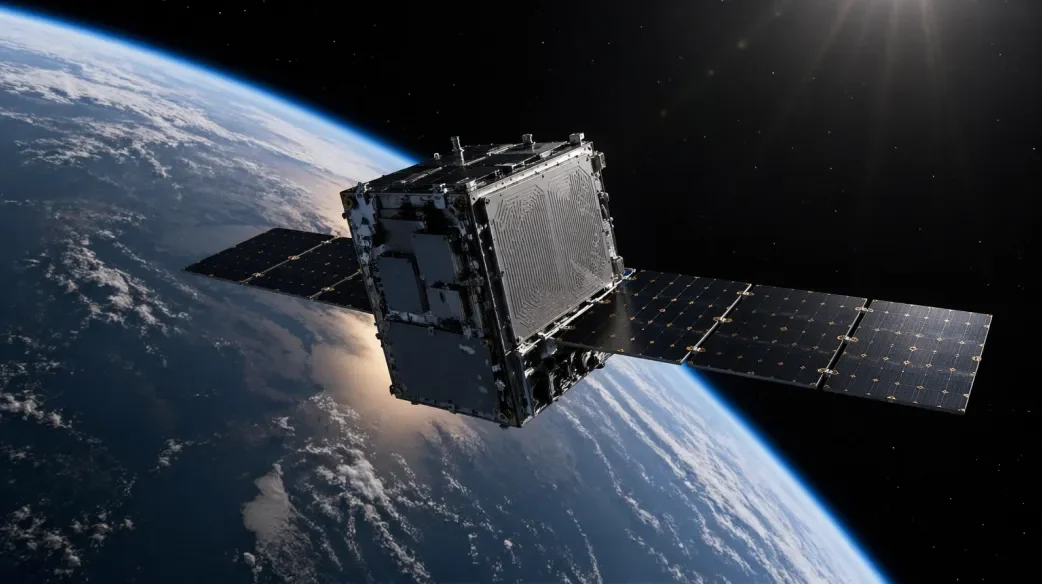
Low Earth Orbit satellites operate in an environment where material behavior can be very different from conditions on Earth. In terrestrial applications, thermal materials are mainly evaluated by thermal conductivity, compressibility, mechanical softness, electrical insulation, and long-term reliability. In space applications, however, another factor becomes critical: outgassing performance.
Outgassing refers to the release of volatile substances from a material when it is exposed to vacuum, heat, or both. These released molecules can travel through the satellite structure and redeposit on colder surfaces. Once condensation occurs, the contamination is extremely difficult, and often impossible, to remove.
This is especially important for LEO satellites because many systems are compact, densely packaged, and highly sensitive to contamination. A small amount of molecular contamination may be enough to affect optical lenses, sensors, electrical contacts, RF components, or precision measurement systems.
For satellite constellations, the risk becomes even greater. A material issue that affects one satellite design may be repeated across hundreds or thousands of units. Therefore, controlling outgassing at the material selection stage is essential for mission reliability, product scalability, and long-term system stability.
The Thermal Environment of Low Earth Orbit
LEO satellites typically operate at altitudes of several hundred to around two thousand kilometers above Earth. At this altitude, the atmosphere is extremely thin, creating a high-vacuum environment. This means that convection, one of the most common heat dissipation methods on Earth, is no longer available.
In space, heat generated by electronic components must be transferred mainly through conduction and then rejected into space through radiation. Thermal interface materials are therefore used to improve heat transfer between components, housings, heat spreaders, cold plates, chassis structures, and radiators.
LEO satellites also experience repeated thermal cycling. As the satellite moves between direct sunlight and Earth’s shadow, surface and internal temperatures can change rapidly. This repeated transition between hot and cold conditions places significant stress on materials.
A suitable thermal interface material for LEO satellite applications must therefore meet several requirements at the same time:
- It must provide stable thermal conductivity.
- It must maintain mechanical compliance under repeated thermal cycling.
- It must remain physically stable under vacuum.
- It must reduce the risk of volatile contamination.
- It must support long-term reliability in mission-critical systems.
This is why material selection for satellite thermal management should not focus only on initial thermal performance. Vacuum compatibility and low-outgassing behavior must also be considered.

How Silicone-Based Materials Can Create Contamination Risks
Silicone-based thermal interface materials are widely used in many electronic applications because they offer good softness, surface wetting, thermal stability, and processability. However, for vacuum-sensitive systems, traditional silicone materials may present outgassing concerns.
Silicone polymers may contain low-molecular-weight siloxanes or other volatile residues. Under normal atmospheric conditions, these substances may remain relatively stable. Under vacuum and elevated temperature conditions, however, the boiling point and volatilization behavior of these substances can change significantly.
When a satellite operates in orbit, heat generated by electronic components can accelerate the release of volatile molecules from silicone-based materials. These molecules may then migrate inside the satellite structure. When they reach colder surfaces, they can condense and form thin contamination layers.
This type of molecular contamination may not be visible to the naked eye, but it can still affect sensitive satellite systems. For this reason, engineers working on LEO satellites, optical payloads, and high-reliability aerospace electronics often evaluate low-outgassing or silicone-free thermal interface materials during the design stage.
Three Failure Risks: Electrical Contacts, Sensors, and Optical Systems
Outgassing-related contamination can affect multiple parts of a satellite system. The following three areas are especially sensitive.
Electrical Contact Reliability
Volatile substances can condense on relays, switches, connectors, and micro-electrical contacts. If the deposited film has insulating characteristics, it may increase contact resistance or interfere with signal transmission.
In severe cases, contamination can contribute to unstable electrical behavior, intermittent contact issues, signal attenuation, or circuit failure. For satellites where repair is not possible after launch, even a small material-related reliability issue can become a serious mission risk.
Sensor Accuracy and Stability
LEO satellites often rely on star trackers, MEMS sensors, radar-related components, thermal sensors, and other precision detection systems. These devices require stable surface conditions and clean operating environments.
If outgassed materials redeposit on sensor surfaces, they may alter the surface properties of the component. This can lead to signal drift, reduced sensitivity, inaccurate measurement, or long-term calibration issues.
For satellite attitude control, orbit maintenance, Earth observation, and communication systems, sensor accuracy is directly related to mission performance. Reducing contamination risk is therefore an important part of satellite material selection.
Optical System Degradation
Optical systems are among the most sensitive areas affected by outgassing. Earth observation satellites, laser communication modules, imaging payloads, and optical sensors all depend on clean lenses, mirrors, filters, and detector surfaces.
When volatile molecules condense on optical surfaces, they may create a fogging-like effect at the molecular level. This can reduce light transmission, change optical performance, lower image quality, or weaken laser signal transmission.
Unlike equipment on Earth, optical components in orbit cannot be manually cleaned or replaced. This makes low-outgassing material selection especially important for satellites with cameras, optical payloads, or laser communication systems.
ASTM E595, TML, and CVCM: What Engineers Should Check
To evaluate material outgassing performance, the aerospace industry commonly refers to ASTM E595. This test method is used to assess the behavior of materials under vacuum and elevated temperature conditions.
Two key metrics are especially important:
TML: Total Mass Loss
TML stands for Total Mass Loss. It measures the percentage of mass lost by a material after exposure to a specified vacuum and temperature environment.
For many aerospace applications, a commonly referenced requirement is:TML < 1.0%
A lower TML value indicates that the material releases less total volatile content under the test conditions.
CVCM: Collected Volatile Condensable Material
CVCM stands for Collected Volatile Condensable Material. It measures the amount of released material that condenses on a collector surface.
For many aerospace applications, a commonly referenced requirement is:CVCM < 0.1%
CVCM is especially important because it directly relates to contamination risk. A material may lose some mass during testing, but if the released substances do not condense on sensitive surfaces, the contamination risk may be lower. Conversely, high CVCM can indicate a greater risk of molecular deposition on optics, sensors, or electrical contacts.
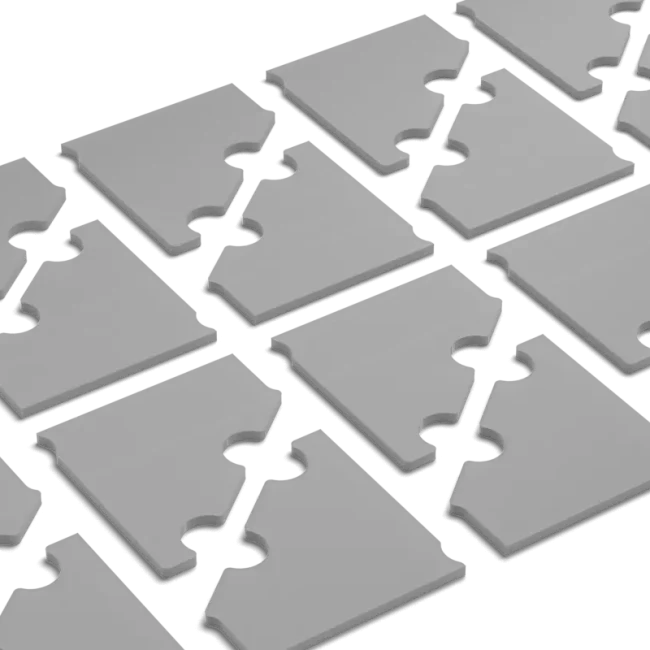
For LEO satellite thermal management, engineers should not only ask for thermal conductivity data. They should also review outgassing data, including TML and CVCM values, when selecting thermal pads, gap fillers, thermal greases, or other thermal interface materials.
Why Silicone-Free Thermal Interface Materials Are Preferred for Vacuum-Sensitive Systems
Silicone-free thermal interface materials are designed to reduce the risks associated with silicone-related volatile compounds. By eliminating the silicone polymer backbone, these materials can help minimize concerns related to low-molecular-weight siloxane outgassing.
For LEO satellite and vacuum-sensitive applications, silicone-free thermal materials may offer several advantages:
- They help reduce silicone-related molecular contamination risks.
- They support cleaner operation around optical and sensor systems.
- They are suitable for applications where siloxane contamination must be minimized.
- They can provide stable thermal transfer between heat-generating components and heat dissipation structures.
- They can be evaluated with ASTM E595, TML, and CVCM data for aerospace-grade applications.
In addition to LEO satellites, silicone-free low-outgassing thermal interface materials may also be used in precision optical equipment, semiconductor cleanroom systems, vacuum equipment, aerospace electronics, and high-reliability testing platforms.
The key point is that low-outgassing performance should be considered early in the design process. If contamination risk is discovered after qualification or launch, the cost of correction can be extremely high.

LiPOLY Solutions for Space-Grade Thermal Management
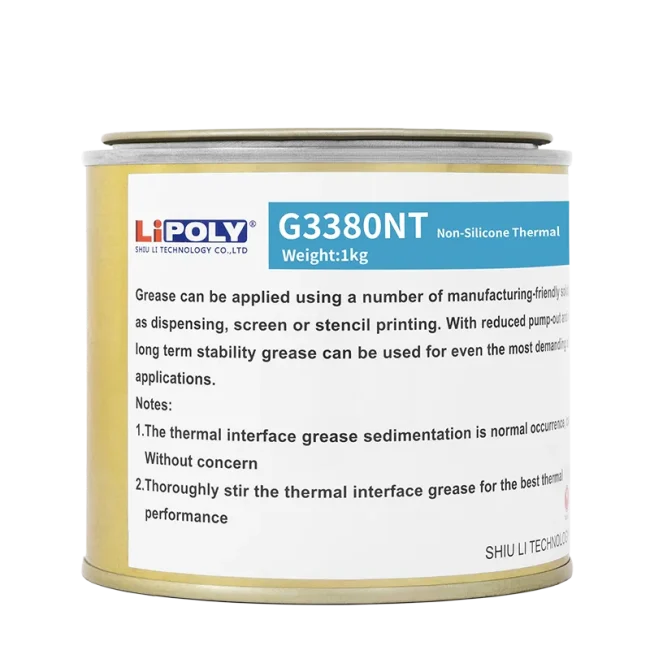
LiPOLY develops thermal interface materials for demanding electronic, industrial, and precision equipment applications. For vacuum-sensitive and contamination-sensitive environments, silicone-free thermal materials can provide engineers with an option for reducing silicone-related outgassing risks while maintaining reliable thermal transfer.
For LEO satellite thermal management, LiPOLY’s silicone-free thermal interface materials are designed to support applications such as:
- Satellite electronic modules
- Power management units
- Optical payload assemblies
- Communication Equipment
- Sensor modules
- Thermal conduction paths between chips, housings, and heat spreaders
- Vacuum-sensitive electronic systems
- Precision optical and cleanroom equipment
By focusing on material stability, thermal performance, and contamination control, LiPOLY helps engineers evaluate thermal solutions that can meet the demands of high-reliability applications.
For projects requiring low-outgassing performance, LiPOLY can provide material consultation, sample evaluation, and technical data for further testing and qualification.
Request Samples and TML/CVCM Test Data
When developing LEO satellites, optical payloads, aerospace electronics, or vacuum-sensitive precision systems, thermal interface material selection should not be based only on thermal conductivity.
Engineers should also consider:
- Outgassing performance
- TML and CVCM data
- Silicone-free formulation options
- Thermal cycling stability
- Mechanical compliance
- Electrical insulation
- Long-term reliability under vacuum-sensitive conditions
LiPOLY provides silicone-free thermal interface material solutions for engineers seeking low-outgassing materials for space-grade and precision applications.
Contact LiPOLY today to request product information, technical consultation, physical samples, and available TML/CVCM test data for your next satellite, aerospace, or vacuum-sensitive thermal management project.